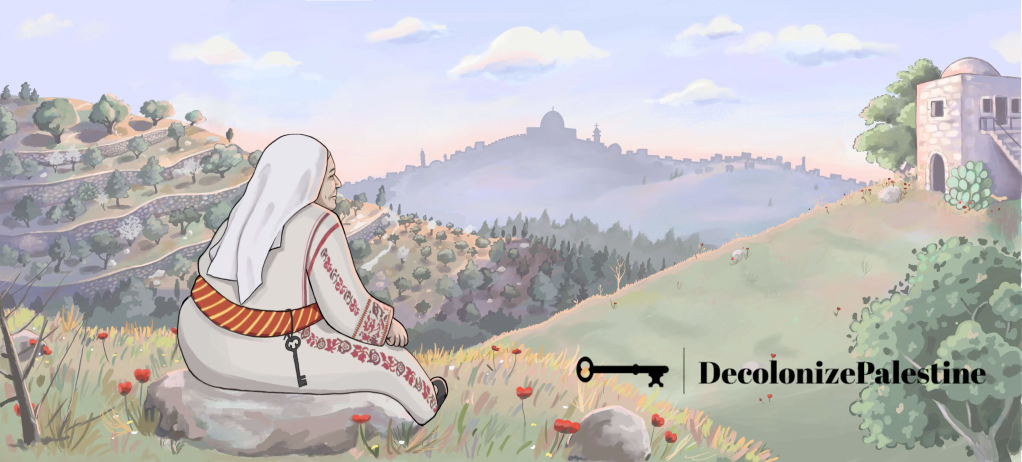
Decolonize Palestine is a collection of resources for organizers and anyone who wants to learn more about Palestine.
That’s it. That’s the post.
🍉🇵🇸

Decolonize Palestine is a collection of resources for organizers and anyone who wants to learn more about Palestine.
That’s it. That’s the post.
🍉🇵🇸
Posted in Decolonization & Unsettling
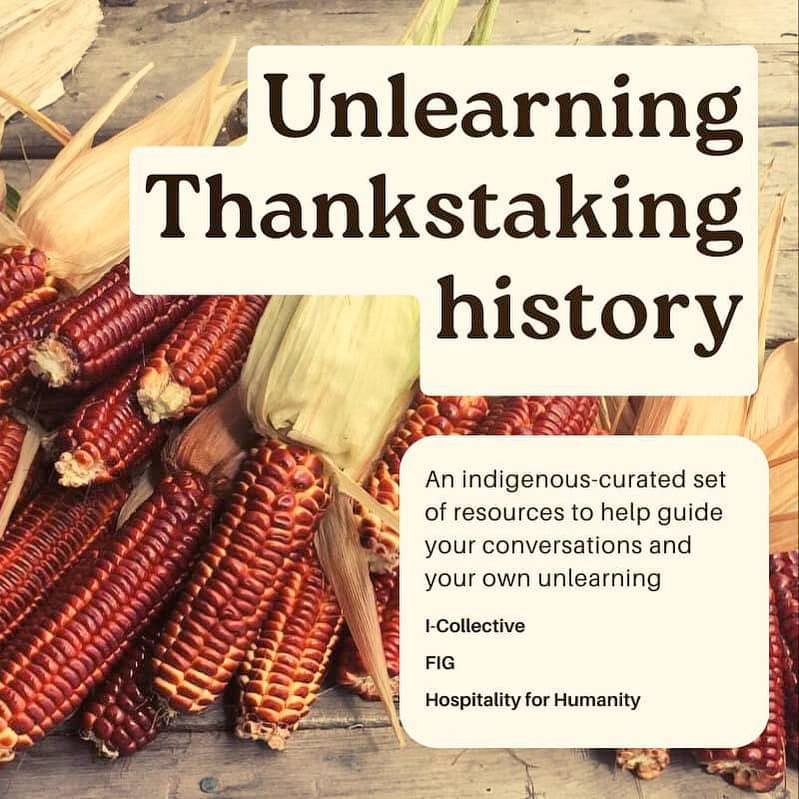
“This is a collection of writings and videos to help orient you to the reality of this season and unlearn the white colonizer myths surrounding the November holiday so that you may honor the historical and current struggles for Indigenous sovereignty that are obscured by the dominant narrative.
This fall, Americans celebrating Thanksgiving as a time of family and bounty while the U.S. government funds and supports Israel’s genocide in Gaza, escalating violence and land grabs in the West Bank, and repression of Palestinians living within the state, simply feels wrong. Indigenous people from the americas are in solidarity with the people of Palestine because we see our own history and current struggles reflected in their plight. Those of us who work in food systems especially can see direct parallels between the colonial strategies deployed by Israel to subjugate Palestinians, and those we’ve experienced in the americas – the calculated destruction and control of our lands, water, crops, and traditional foodways.
Should you decide to celebrate this holiday, we encourage you to use it as an opportunity to educate yourselves and your family about historical and current struggles for Indigenous land and food sovereignty where you live, in Palestine, and around the world. One way you can help to transform the legacy of genocide and land theft of this country is to take action now to end the active genocide in Gaza which the U.S. is supporting. Let’s stop repeating this history!
(We stand in solidarity with all the genocides and violence happening around the world in the name of Colonial Imperialism, particularly the Congo and Sudan.)”
2023 resources by I-Collective , FIG and Hospitality for Humanity
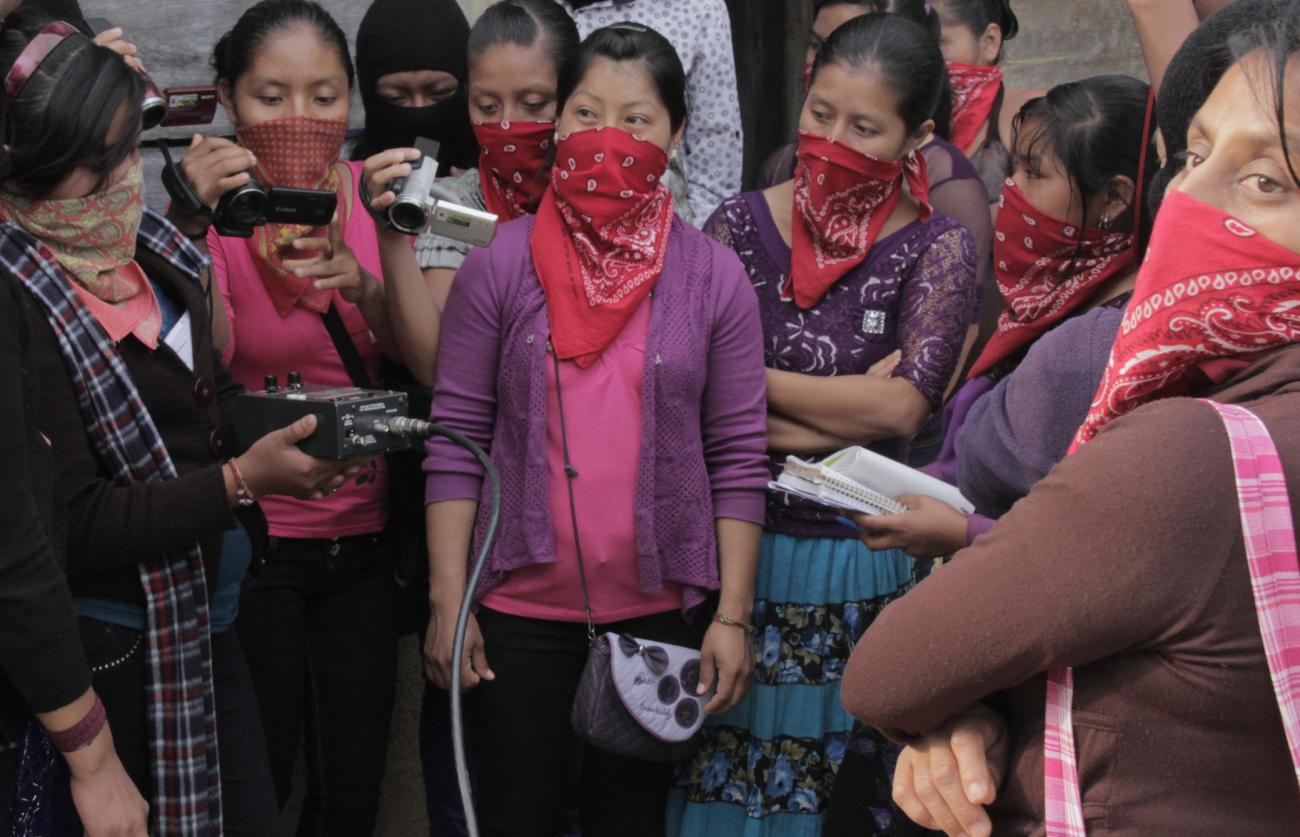
By Bia’ni Madsa’ Juárez López, Cultural Survival Quarterly Magazine
The path to achieving political autonomy in local government has been very complicated for Indigenous Peoples in Mexico. Many barriers have been placed in the way of exercising their rights. Political and social violence, long processes for those who seek recognition from the State, and the invisibility of those who already exercise autonomy under the shadow of State power, are just some of the problems faced. The national recognition of the historical, so-called “Indigenous normative systems” and others that are emerging in various states, has yet to be realized.
Many Indigenous communities have maintained their forms of community organization rooted in resistance against the pressures from the State. This almost always includes a collective and rotating form of governance, as well as the administration and collective ownership of land. In these communities, family representatives make up the community assembly, the most important body of power in the community. In assembly meetings, key decisions are made for the community, such as the election of government representatives, approval of the use of the community budget, the performance of community works, and the appointment of authorities. The positions are considered service and have a relatively short duration, generally between one to three years.
Although several communities in Mexico have managed to maintain this collective form of governance, many times they live in the shadows; at the local level they maintain their collective forms of governance, but they must also participate in the political party system, which implies accepting the installation of polling stations and political propaganda in their communities and voting in municipal, state, and federal elections. Participating in a political party system has kept communities in constant political and social crisis due to power disputes between those parties. In many cases, chiefdoms and political monopolies have been established in the communities.
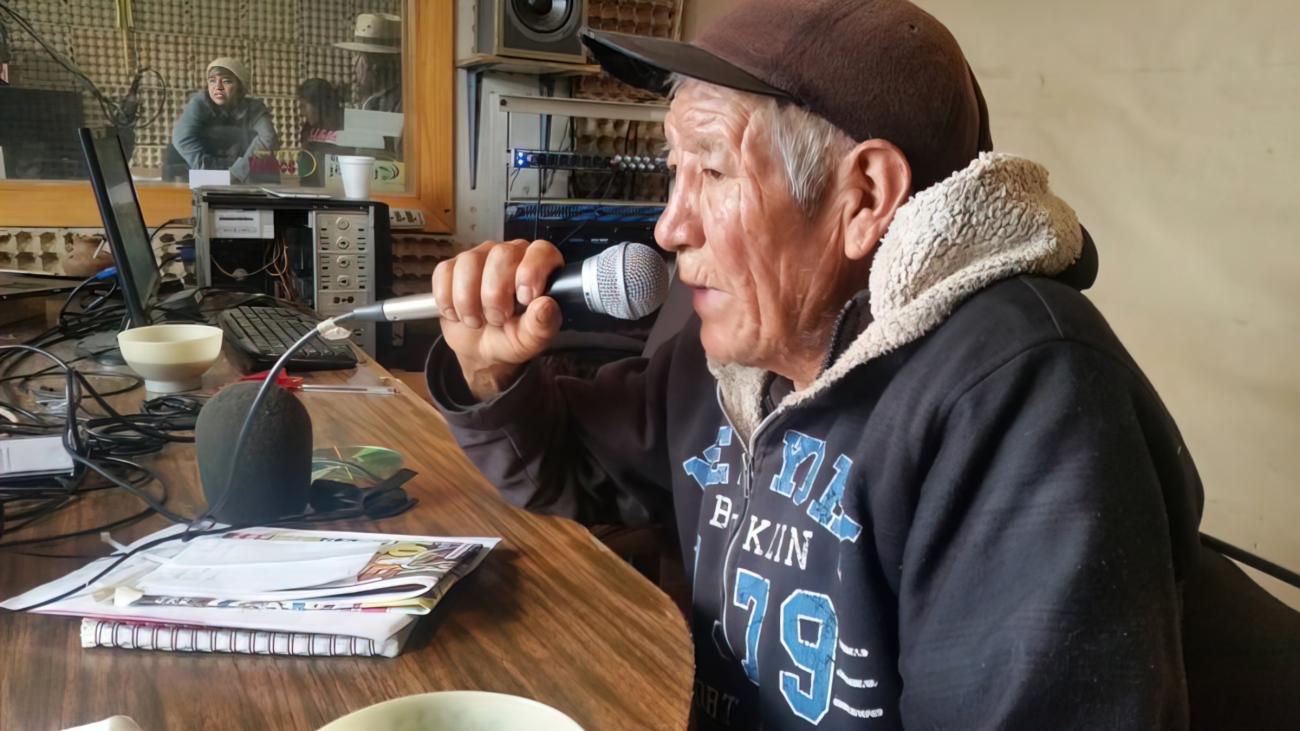
Sócrates Vásquez Garcia, Cultural Survival Quarterly Magazine
Too often, discussions about Indigenous communication have been reduced to an analysis of the use of communications technology. It is important to approach Indigenous communication beyond just technology use and explain it from Indigenous points of view. In our towns and communities, we affirm, with increasing force, that we existed long before the arrival of the European colonizers. Our social organization is collective in nature and is rooted in a relationship with Mother Earth. This statement seems simple and is easy to repeat today, but it represents years of resistance, struggle, transformation, and the contradictions that continue among Peoples in Abya Yala (Latin America).
These forms of collective organization rooted in relationships with nature are being revitalized and transformed. After five centuries of domination in military, economic, political, philosophical, and religious spheres, it is clear that colonization has not ended. We must name it and denounce it. We also have to talk about the “myth of modernity” in its purest expression, which is developmentalism. This idea has its origin in the medieval cities of Europe and was reaffirmed through the “discoveries” of other lands, which amounted to controlling, forcing, and stripping Native peoples of their livelihoods. This process, which is called “discovery,” is, in reality, a suppression of the other. This suppression represents centuries of resistance, adaptation, and sometimes adoption of the ways imposed by the colonizing power.
By Chenae Bullock, Cultural Survival Quarterly Magazine
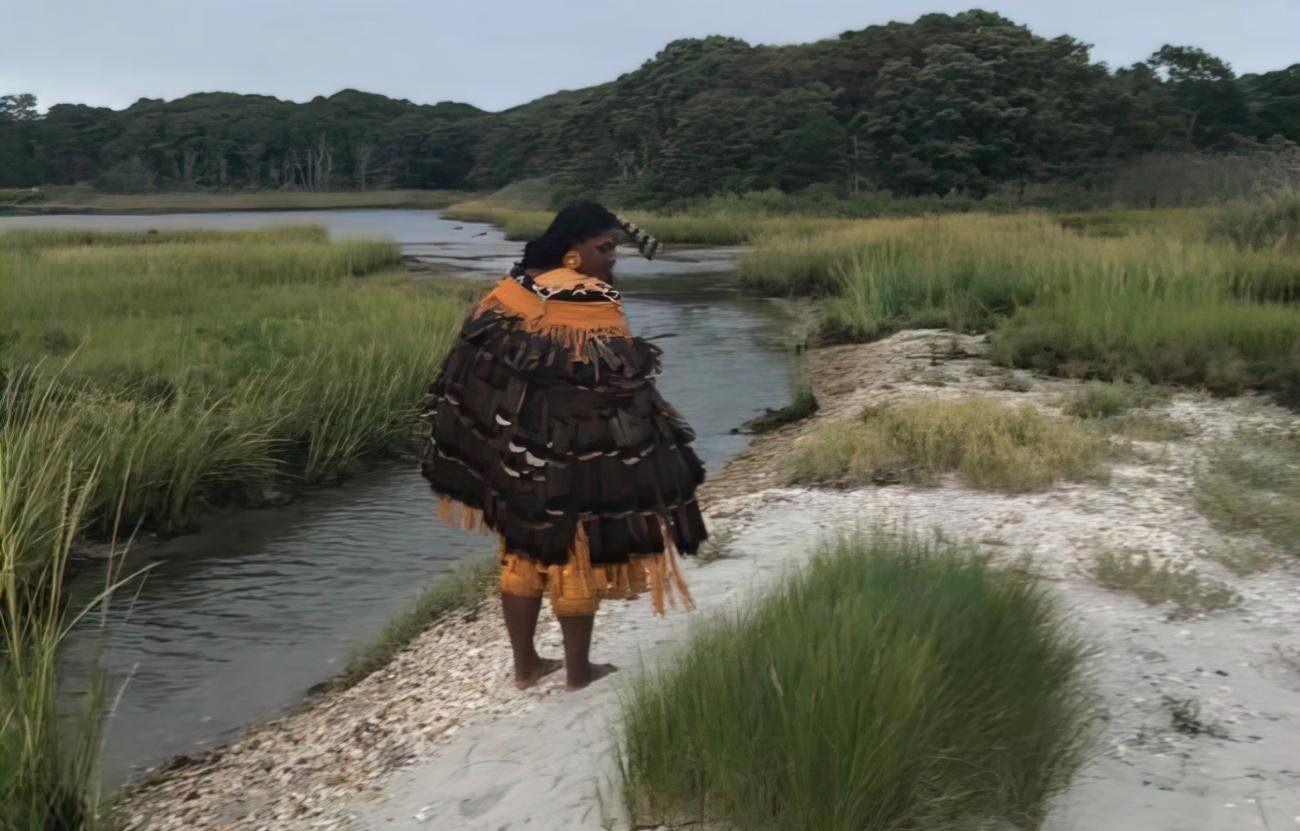
My given name is Sagkompanau Mishoon Netooeusqau, which translates to “I lead canoe I am Butterflywoman” in the Shinnecock and Montauk language. I am a member of the Shinnecock Nation and a descendant of the Montauk people of Long Island, New York. The foundation of my work has been based on the resurgence of the traditional canoe culture of the Northeast coastal Algonquin communities. Not only have I worked with Indigenous communities globally, I have worked to create stewardship between these communities and non-Indigenous communities. I have organized historically sacred paddles in the ancient waterways of the Northeastern seaboard to spread awareness of the roles Indigenous communities contribute to ocean sustainability internationally and at places like the Kennedy School of Government at Harvard University, the Earth Institute at Columbia Law School, and International Treaty Commission at the United Nations, and I have assessed many sites for signs of submerged cultural history for Atlantic Shores Cultural Core Analysis. I have dedicated my life for the betterment of not only my community, but for our Earth. I have invested energy in reviving and sustaining our traditional lifeways.
In the fall of 2016, I dedicated six months of my life to help the people at the Oceti Sakowin camp at Standing Rock prepare their camps for the winter. The Elders came to my campsite after standing on the banks of Cannonball River and emotionally watching cross-deputized authorities from non-Indigenous police departments show a presence on a sacred site to the Hunkpapa Peoples. They asked me to paddle around to see how these non-Indigenous police officers were getting to the sacred site. Using a donated canoe and paddles they had made with a 4×4 piece of wood, two other water protectors and I paddled in the Cannonball River as the Elders asked. While I was paddling, I looked into the faces of the Oceti Sakowin Peoples on the river banks. I witnessed a few swim with their horses as far as they could, but the water was too muddy and deep to make it across. I prayed that what was taking place that day somehow would bring them back to their ancient canoe ways. At that moment, I realized there was more to do than prepare camps for the winter for the Oceti Sakowin while being there.
By Edson Krenak Naknanuk, Cultural Survival Quarterly Magazine
When the European colonial powers ruled our territories of Abya Yala, they implemented policies of oppression by ransacking, dispossessing, and enslaving mainly Black and Indigenous populations. In the last five centuries those policies were driven fundamentally by racism. Colonialism created a bureaucratic, institutional, and political process to discriminate and subjugate different ethnic groups. Centuries of colonial policies produced not only economic and social disadvantages, but also spiritual and emotional traumas for generations.
Colonial trauma, and therefore our liberation, affects all spheres of our lives: our being (who am I, and who is “the other?” How do I feel in relation to the other?); our power (who commands and who obeys? Who occupies the places of power? Who decides? Who leads?); our knowing (which knowledge is most valid? Who seems to have more authority when speaking?); and our doing (who has access to education, to the creation of valid knowledge, etc.? Who produces or co-creates? What is the impact of the making on the environment? Who benefits from the making?)
Colonization as a systematic source for structural racism, prejudice, and inequality persists because Western society constantly fails to recognize and acknowledge it. Decolonizing is a process that starts with identifying and analyzing the unequal power relations. When the subject matter is history, we must see it as a discourse, an ideological object that has an owner.
Decolonizing history is an exercise that we must start by questioning the story that is told, who tells it, and which voices have been silenced that still exist and live among us. Indigenous Peoples point out that the history of mankind is inseparable from the history of the other species, and is deeply connected with the planet (the Pachamama for some relatives of Abya Yala), Mother Earth.

Dreams aren’t practical, they are a vision of what is possible.
We live in a country of colonized cultures. The project that is the United States is a melting pot of bodies that have been marginalized from its inception. Still today, those who have been othered by supremacy culture continue to strive to cultivate a sense of belonging and freedom despite the perpetual attempts to oppress us.
I believe that many of our recent efforts to abolish harmful systems of oppression are being done with consideration of the white gaze, through a lens of scarcity and lack. Our responses to oppression have been colonized. If we are to be successful at dismantling the systems of white supremacy, patriarchy, capitalism, and anthropocentrism that enforce domination and oppression over people and ecosystems, we have to start seeing our abundance. It’s imperative for us to move forward and live in right relationship with each other and the planet.
The late Grace Lee Boggs said, “The time has come for a new dream, that’s what being a revolutionary is. I don’t know what the next American revolution is going to be like, but you might be able to imagine it, if your imagination were rich enough.” How do we liberate ourselves from all supremacy culture to dream the new dream that Boggs speaks of? Dreams are an essential part of our human cognition, identity, and being. They allow us to bring our whole selves and our communities into imagining new worlds and realities. They conjure the unseen and unknown, while redesigning our notions of what is possible.
I often reflect on the dreams of my parents, who immigrated to the U.S. from India in 1973. Like many other immigrants from the Global Majority, they arrived here with very few possessions—and a dream. One of economic and physical security for their newly arrived family, their family back home in India, and also their future generations. Their dream of familial economic and physical security is not exclusive; it’s a dream that all people have, but the oppressive structures that exist in this country and around the world actively prevent queer, trans, Black, Indigenous, and other people of color from realizing our dreams.

A Critical Commentary on Eve Tuck and K. Wayne Yang’s “Decolonization is Not a Metaphor”
By Tapji Garba & Sara-Maria Sorentino, Antipode Journal, Volume 52, Issue 3, May 2020
This essay offers a critical analysis of the metaphysical and methodological presuppositions of Eve Tuck and K. Wayne Yang’s “Decolonization is Not a Metaphor”. While Tuck and Yang position settler colonial spatiality as structured by a settler-native-slave triad, we argue that their critique of metaphor entails the collapse of the triad into a settler-native dyad, the reduction of slavery to forced labour, and a division between the material and the symbolic that forecloses not only an analysis of slavery, but also the constitution of settler colonialism itself. Through an immanent critique of “Decolonization is Not a Metaphor” we identify what animates their critique of metaphor, and drawing on scholarship in Black studies, we offer an alternative theorisation of slavery and settler colonialism.
The great shadow of North American history I think is that settlers know deep down that we don’t belong here. The idea of “settling” the west was predicated on the continent being cleansed of its original inhabitants. This happened in a number of ways. There was outright murder perpetuated by war, disease and neglect. There were treaties which ripped people from their territories and bound the loyalties of indigenous people to the Crown rather than their own laws. There was the residential school system which had as its goal the “education” and “civilization” of indigenous children such that they would no longer be indigenous, which resulted in hundreds of thousands being torn from their families and raised by many abusive and unwell priests, nuns, administrators, social workers, nurses, doctors, coaches and teachers.
It seems everywhere settlers ventured on this continent, they have left unsettled peoples, lands, animal populations and communities. The devastation of indigenous population over 500 years and including to the present day through the loss of lands, language, autonomy, self-governance, dignity, health and resources has been rightly called genocide, and documented as such in the last decades’ inquiries into residential school legacies and missing and murdered indigenous women and girls. There has been a deliberation erasure of peoples here, which made possible economies that have resulted in some of the monetarily richest people in human history living some of the most prosperous lives humans have ever lived.
And I think deep down, every knows that it was gained on the backs of genocide.
So that has some bearing on whether settlers can even feel at home here. And I think that unresolved cognitive dissonance – maybe deeper, maybe a soul dissonance – perpetuates inhumane level of violence towards people, land and community. On this continent the world’s mightiest military power has taken root, supported by the world’s mightiest economic engine and spread death and exploitation around the world.

By Cameron Crowder, via Hood Communist
The United States is a project of both anti-Blackness and racial-colonial power. From the founding of this white supremacist settler-colonial state, Black people have endured 250 years of slavery, ninety years of Jim Crow, sixty years of “separate but equal” legal doctrine, and thirty-five years of explicitly anti-Black housing laws among other insidious forms of de jure and de facto racial discrimination. The racial capitalist state and its policing functionaries employ state violence as a means of containing and controlling the working-class, especially racialized and colonized domestic peripheries. The late political prisoner and revolutionary ancestor George Jackson (1971, p. 99) writes the following:
The purpose of the chief repressive institutions within the totalitarian capitalist state is clearly to discourage and prohibit certain activity, and the prohibitions are aimed at very distinctly defined sectors of the class- and race-sensitized society. The ultimate expression of law is not order—it’s prison. There are hundreds upon hundreds of prisons, thousands upon thousands of laws, yet there is no social order, no social peace. …Bourgeois law protects property relations and not social relationships.
The United States is a punitive carceral state with 25 percent of the world’s population behind bars despite comprising only 5 percent of the world’s population (Collier, 2014, p. 56; Hayes, 2017, p. 17). The American criminal so-called “justice” system holds almost 2.3 million people in 1,833 state prisons, 110 federal prisons, 1,772 juvenile prisons, 3,134 local jails, 218 immigration detention facilities, and 80 Indian Country jails as well as in military prisons, civil commitment centers, state psychiatric hospitals, and prisons in the U.S. settler-colonies (Sawyer & Wagner, 2020). U.S. incarceration is disproportionately racialized, targeting Black and brown people who represent 60 percent of the incarcerated (Marable, 2015). If Black and Latino people were incarcerated at the same rate as whites, their imprisoned and jailed populations would decline by almost 40 percent (NAACP, 2019). The problems are not rooted in crime but policing itself which constructs, (re)produces, and institutes white supremacy and anti-Blackness through racial capitalism. The police have been waging asymmetric domestic warfare on Black people, encircling, and capturing their prospects for self-determination and self-actualization. From the Greensboro Massacre of 1979 to the murder of Marcus Deon Smith of 2018 to the murder of George Floyd in 2020, the only solution for Black liberation is abolishing the police and freeing what is essentially a semi-colony of peripheral peoples.
This essay has five sections. This first section discusses the problems of policing. The second section explains the history of U.S. policing and its development. The third section lays out the failure of liberal reforms to grapple with policing as an institution. The fourth section argues the case for police abolition. The last section concludes.
Posted in Anti-Racism, colonialism, cultural genocide, Decolonization & Unsettling, oppression, racism
Tagged Abolition, Police Abolition











 CENSORED NEWS Black Mesa Indigenous Support Survival Solidarity Indigenous Solidarity Network IndigenousNews.org Onkwehón:we Rising Indian Country Today Mohawk Nation News Republic of Lakotah Indigenous Peoples Issues & Resources








 Decolonization: Indigeneity, Education & Society Intercontinental Cry Indigenous Action Media Warrior Publications Survival International Native News Network Aboriginal Press News Service Aboriginal News Group Amazon Watch Indymedia Earth First! Newswire Unknown Feed Infoshop News


 Unsettling America